I was reading a favorite blog the other day ("Missional Shift" by Steve Knight) where some pretty good theologians were asked to comment on what was the "chief political concern of the Bible?" The answers were varied, given the ranging theological interests represented, but many came down on some version of working for God's kingdom, or justice or righteousness, especially for those on the edges of power and respect. All well and well, and nothing too surprising to me as far as I could see. Everyone seemed to have taken the question seriously, responded appropriately out of their tradition, and gave short, succinct answers. The first comment about the post, however, noted that the answer, at least according to his reading of all the theologians presented, was how God must be against abortion. That's the theological version of what I call "presidential politics."
Presidential politics, unlike normal everyday, run-of-the-mill politics is always, Always, ALWAYS reduced to a soundbyte that has little to do with the questions being asked or the answers being given. Just as the commentator on the blog had reduced the greatest of God's vision to one subject, so too these days, we tend to reduce whatever the Presidential candidates say or do to whatever little thing we think is memorable or sentimental enough to capture attention. I have often spoken about my generations' distaste for presidential politics because we came of age during the Nixon administration. You can not imagine what it was like to go to junior high civics classes and watch the President have to resign. No teacher was prepared to help teenage minds comprehend that. So we gave up. As I have talked over the years to people who were in junior high learning about government for the first time by watching Nixon we all respond the same way: they're (Presidents) all the same, they'll all say whatever they want and do whatever they do. Presidents don't matter. Find me anyone born into this country between 1961 and 1965 who doesn't believe that...and he or she will be the first person of those years I've met who believes Presidents matter. (I understand there are other issues, and the sample matter is small and peculiar--but I want you to know where I am coming from here.)
What's interesting to me is that presidential politics differs greatly from Jesus' "politics" (such as it is, and in this case it is something like "kingdom of God.") Jesus, regardless of how you think he falls politically, never made things easy. He was good for soundbytes, but always to confuse and obfuscate, never to sentimentalize or make simple. Even his "simple" parables are so complex they boggle the mind. For example, how is "mustard" the greatest shrub when it's a weed to be burned? Following the politics of Jesus is never easy, always hard, and probably not reducible to a blog post. And for me, Jesus Christ matters way more than any President...I'll take difficult and confusing any time over sentimental claptrap and social-issue fearmongering.
So I suppose we have another few weeks of reducing everything to the absurd. That's presidential politics. And probably not the kingdom of God.
May your tables be full and your conversations be true.
Your Blog Steward
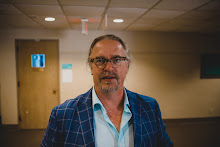
- Scott Frederickson
- I am more and more convinced that most congregations die from a staggering lack of imagination. Let's change that. Let's imagine a creative future with God and each other together. Drop me a line on email or leave a comment if you have thoughts on God, Jesus, congregations, the church or whatever.... I look forward to our conversations.
Tuesday, October 16, 2012


Wednesday, October 3, 2012
Wondering about "Hell"
This Friday, here in Omaha, I am helping to moderate to a discussion with film-maker Kevin Miller after the premier of his new film Hellbound? This is somewhat ironic, if not downright hilarious, that I, of all people, are trying to help people process a film about something I have never believed in, and probably never will.
I watched the film with my parents a few weeks ago. My parents, around 75 years old, myself, around 50, could never remember believing in hell. They remembered--vaguely--hearing a few sermons about hell back in their younger days, but that is more experience than I have with the concept. My parents didn't seem to believe much in hell, and consequently I grew up in a Christian religious tradition that did not preach about hell.
Obviously I knew about hell from TV and Hollywood growing up, but not from going to church. (And I went just about every week, and I still do--and if someone had preached about it, I would have heard it--I think.) As more and more of the Christian tradition opened up to me I realized that a lot of Christians had--and have-invested a lot of time and energy into hell. Way more than the Bible does. And, since I follow the God of the Bible, I don't put a lot of stock in hell either...just my way of being biblical.
In graduate school at the University of Texas (Hook 'em Horns!) I had a class in 17th Century British poetry. Since I had to write on Milton, I went back and studied a lot of the great literature on hell, focusing mostly on Dante and Milton. I discovered that most of what we know about hell comes from them rather than from the Bible. As much as I love Dante and Milton they don't take precedence over Jesus, or Moses or John for that matter. So I have never found a need to believe in hell...so I don't. (I admit the possibility exists, but I also admit unicorns and vampires may exist...so take that for what you will.)
Miller's film has people in it who believe in hell and believe that it exists. He gave them a lot of room to make the case that hell exists, and I think they are lying to themselves. I have never believed more in Sartre's mauvaise foi (bad faith caused by intentional self-delusion) than in listening to people try and convince me that hell exists. And the folks in the movie didn't convince me because they sounded more like medieval poets than bibilical scholars or theologians...they didn't convince me because they didn't offer any arguments about why God would need hell.
You see, people talk about God being mad at us at times (and in this I agree). God probably does get mad at us when we try to be God rather than human (sin). But that does not mean there has to be a hell just because God gets mad every now and then. There are other ways to respond to anger, and I am pretty sure God knows them. To posit a hell because WE are angry or WE need to have a place where bad people get judged...well, that's just not worth my time.
Now I realize a lot of people believe in hell, but I wonder what we would become if we gave up our belief in hell? What would change in the way we deal with people, our enemies, our fears, our confusions if we didn't have hell to bail us out? What might God be able to do with us if we didn't keep putting this idea of hell in God's way?
May your tables be full and your conversations be true.
I watched the film with my parents a few weeks ago. My parents, around 75 years old, myself, around 50, could never remember believing in hell. They remembered--vaguely--hearing a few sermons about hell back in their younger days, but that is more experience than I have with the concept. My parents didn't seem to believe much in hell, and consequently I grew up in a Christian religious tradition that did not preach about hell.
Obviously I knew about hell from TV and Hollywood growing up, but not from going to church. (And I went just about every week, and I still do--and if someone had preached about it, I would have heard it--I think.) As more and more of the Christian tradition opened up to me I realized that a lot of Christians had--and have-invested a lot of time and energy into hell. Way more than the Bible does. And, since I follow the God of the Bible, I don't put a lot of stock in hell either...just my way of being biblical.
In graduate school at the University of Texas (Hook 'em Horns!) I had a class in 17th Century British poetry. Since I had to write on Milton, I went back and studied a lot of the great literature on hell, focusing mostly on Dante and Milton. I discovered that most of what we know about hell comes from them rather than from the Bible. As much as I love Dante and Milton they don't take precedence over Jesus, or Moses or John for that matter. So I have never found a need to believe in hell...so I don't. (I admit the possibility exists, but I also admit unicorns and vampires may exist...so take that for what you will.)
Miller's film has people in it who believe in hell and believe that it exists. He gave them a lot of room to make the case that hell exists, and I think they are lying to themselves. I have never believed more in Sartre's mauvaise foi (bad faith caused by intentional self-delusion) than in listening to people try and convince me that hell exists. And the folks in the movie didn't convince me because they sounded more like medieval poets than bibilical scholars or theologians...they didn't convince me because they didn't offer any arguments about why God would need hell.
You see, people talk about God being mad at us at times (and in this I agree). God probably does get mad at us when we try to be God rather than human (sin). But that does not mean there has to be a hell just because God gets mad every now and then. There are other ways to respond to anger, and I am pretty sure God knows them. To posit a hell because WE are angry or WE need to have a place where bad people get judged...well, that's just not worth my time.
Now I realize a lot of people believe in hell, but I wonder what we would become if we gave up our belief in hell? What would change in the way we deal with people, our enemies, our fears, our confusions if we didn't have hell to bail us out? What might God be able to do with us if we didn't keep putting this idea of hell in God's way?
May your tables be full and your conversations be true.
Monday, September 24, 2012
Vikings! Skol!
I am a big-time Scandanavian-American. All 4 of my grandparents were 1st generation Swedish, Norwegian, and Finnish, and until my parents came along there was no mixing. My dad's parents were Finnish and Swedish, my mom's Norwegian and Swedish. I grew up in Minneapolis, MN, and I was born when the Minnesota Vikings became our first professional football team.
I grew up with a hodge-podge of Scandanavian traditions that had been part of the heritage of those in the "old country," and childhood memories of lutefisk, Midsommer, and O Store God are part of my life. I even went to a college (Gustavus Adolphus College, St. Peter, MN) that was founded by Swedish immigrants, and one of the oldest Swedish-American institutions around. In fact, every year, the college holds a "Nobel Conference" which invites scientists from around the globe to convene about current issues, and is the only program outside of Sweden which the Nobel Prize committee authorizes. When I was at GAC, the King of Sweden visited, which, outside of a chance encounter with Mikhail Gorbachev in 1993 counts as my only international political experience. I even decorate my kitchen with Dala horses and kitschy tiles that say, Velkommen! I have the street cred for my Scandanavian-Americanness.
Did I mention I have long, blonde hair? I mean, like down to the middle of my back? You can't tell in my pictures because I usually pull it back, but put me in some clothes made out of dead animals, and give me a battle-axe, and your Hollywood stereotype would be fulfilled! Viking! Skol!
"Skol" is a toast word, like "Cheers!" It is also the theme song of the Minnesota Vikings football team. They played well yesterday, and they hadn't done that for a long time. I remember vividly the last time they played good football. I lived in another state, I still had a child in school, and Jared Allen made Tony Romo look silly. (To be honest, Tony Romo often doesn't need any help.) We beat the 49ers out of San Francisco yesterday, and we beat them pretty well. Here's why I am telling you all this...
Never count out a Viking--even one who only gets the name because they got drafted into the NFL. For that matter, always beware the underdog. (The Vikings not only won outright and covered the spread, but the continued the season-long NFL tradition of home dogs covering. This is a good year to bet the home team.) So much of our lives are spent trying to impress front-runners and other sycophants that we lose sight of what life is all about: living. (Or, in the case of the Vikings, playing football.) Underdogs, those who are "supposed to lose," who people often don't care enough about to even try to be part of their lives (think "47%"), are a great story, but they shouldn't be. All players, just like all people who live, should be accorded respect and value as one of God's children. Even if that child has had a bad day, week, or even a decade.
I am proud of my Viking heritage (and my football team), but I am even more proud of the many people who are, have been, and I hope will be part of my life. Because when all is said and done, we are all underdogs, hoc est verum. And that's worth a glass or two. Skol!
May your tables be full and your conversations be true.
I grew up with a hodge-podge of Scandanavian traditions that had been part of the heritage of those in the "old country," and childhood memories of lutefisk, Midsommer, and O Store God are part of my life. I even went to a college (Gustavus Adolphus College, St. Peter, MN) that was founded by Swedish immigrants, and one of the oldest Swedish-American institutions around. In fact, every year, the college holds a "Nobel Conference" which invites scientists from around the globe to convene about current issues, and is the only program outside of Sweden which the Nobel Prize committee authorizes. When I was at GAC, the King of Sweden visited, which, outside of a chance encounter with Mikhail Gorbachev in 1993 counts as my only international political experience. I even decorate my kitchen with Dala horses and kitschy tiles that say, Velkommen! I have the street cred for my Scandanavian-Americanness.
Did I mention I have long, blonde hair? I mean, like down to the middle of my back? You can't tell in my pictures because I usually pull it back, but put me in some clothes made out of dead animals, and give me a battle-axe, and your Hollywood stereotype would be fulfilled! Viking! Skol!
"Skol" is a toast word, like "Cheers!" It is also the theme song of the Minnesota Vikings football team. They played well yesterday, and they hadn't done that for a long time. I remember vividly the last time they played good football. I lived in another state, I still had a child in school, and Jared Allen made Tony Romo look silly. (To be honest, Tony Romo often doesn't need any help.) We beat the 49ers out of San Francisco yesterday, and we beat them pretty well. Here's why I am telling you all this...
Never count out a Viking--even one who only gets the name because they got drafted into the NFL. For that matter, always beware the underdog. (The Vikings not only won outright and covered the spread, but the continued the season-long NFL tradition of home dogs covering. This is a good year to bet the home team.) So much of our lives are spent trying to impress front-runners and other sycophants that we lose sight of what life is all about: living. (Or, in the case of the Vikings, playing football.) Underdogs, those who are "supposed to lose," who people often don't care enough about to even try to be part of their lives (think "47%"), are a great story, but they shouldn't be. All players, just like all people who live, should be accorded respect and value as one of God's children. Even if that child has had a bad day, week, or even a decade.
I am proud of my Viking heritage (and my football team), but I am even more proud of the many people who are, have been, and I hope will be part of my life. Because when all is said and done, we are all underdogs, hoc est verum. And that's worth a glass or two. Skol!
May your tables be full and your conversations be true.
Monday, September 17, 2012
Missional Review: Dog Days edition
As summer runs to a close for another year, the weeks have gone into full-bore "get ready for Winter" mode. How does time get faster, anyhow?
So my friend and colleague Mark Davis, he of Left Behond and Loving It fame, presented a wonderful lecture this week where he urged us Progressive, unsure-of-the-Bible-so-we-act-like-it's-not-important types to get into some kind of way of understanding this God we proclaim to believe in. To do so, he argued, you might have to read the Bible.
I especially loved his distinction between the wrath of Satan and the wrath of God. The wrath of Satan in Mark's world is what we call "our reality." When we neglect to offer aid or help to people in need, when there are things we could do to make the world better but we don't, when we can have a positive impact, but instead make a negative one...those kinds of things are the wrath of Satan. In other words, WE are satans to each other. And whether we treat each other negatively by actually doing something, or neglecting to do something, we are behaving satanically.
The wrath of God, such as it is, are those things we do not control, or have no chance yet of controlling. The weather, for example, can often be seen as an act of God's wrath. Does this mean God sends hurricanes to fishing villages to wipe them out? Nope. But there are going to be hurricanes, and people in the fishing villages have to learn how to live amongst them, and this is important--not add the wrath of Satan to the mix.
Have you ever noticed how there are feats of great mercy amidst natural disasters? Those are people who are adding the love of God to the disaster, not the wrath of Satan. When disasters of this type strike your area, do you add God's love or Satan's wrath to the mix?
And I made an annual trip to the Minnesota Renaissance Festival. I having been going there since my junior year of High School, with a few years off here and there, but my oldest daughter--now 22--told Ralph Puke last year, that he is like a second father to her. He was appalled...but pleased that someone kept listening to his jokes. Like any other carnival or fair, this event is about the people. And the money...as a lot of people make their living on this quasi-costume play, street theatre, nerdfest. I mean, who needs a $1300 astrolabe when you can get a GPS for 69 bucks? And you don't need a Masters' degree in Mathematics to get it to work?
What I always wonder as I am wandering around there grazing and gazing, is how different this is from 16th Century England. (I let the historically "improbable" ninjas, transvestite pirates, and Jamaican jerk chicken wrap try not to influence me too much about this.) Beccause 16th Century Britain was a religious battleground. You don't see much of that in Shakopee...
But I think that shows the major shift Christianity accomplished in the past 500 years. It went from being a bone of contention to a lifestyle. Most people treat Christianity as a lifestyle, and for those Christians who want it to be about God, or the highest calling of humanity, or the stewardship of creation, they are bound to be disappointed. People don't care if you're Christian until you try to make them one...and then they get angry. If you don't care about making people Christian? Well, you're fun to look at, and interesting to talk to, but how can you help me on my spiritual journey?
Well...have you heard about the difference between the wrath of Satan versus the love of God?
May your tables be full, and your conversations be true.
So my friend and colleague Mark Davis, he of Left Behond and Loving It fame, presented a wonderful lecture this week where he urged us Progressive, unsure-of-the-Bible-so-we-act-like-it's-not-important types to get into some kind of way of understanding this God we proclaim to believe in. To do so, he argued, you might have to read the Bible.
I especially loved his distinction between the wrath of Satan and the wrath of God. The wrath of Satan in Mark's world is what we call "our reality." When we neglect to offer aid or help to people in need, when there are things we could do to make the world better but we don't, when we can have a positive impact, but instead make a negative one...those kinds of things are the wrath of Satan. In other words, WE are satans to each other. And whether we treat each other negatively by actually doing something, or neglecting to do something, we are behaving satanically.
The wrath of God, such as it is, are those things we do not control, or have no chance yet of controlling. The weather, for example, can often be seen as an act of God's wrath. Does this mean God sends hurricanes to fishing villages to wipe them out? Nope. But there are going to be hurricanes, and people in the fishing villages have to learn how to live amongst them, and this is important--not add the wrath of Satan to the mix.
Have you ever noticed how there are feats of great mercy amidst natural disasters? Those are people who are adding the love of God to the disaster, not the wrath of Satan. When disasters of this type strike your area, do you add God's love or Satan's wrath to the mix?
And I made an annual trip to the Minnesota Renaissance Festival. I having been going there since my junior year of High School, with a few years off here and there, but my oldest daughter--now 22--told Ralph Puke last year, that he is like a second father to her. He was appalled...but pleased that someone kept listening to his jokes. Like any other carnival or fair, this event is about the people. And the money...as a lot of people make their living on this quasi-costume play, street theatre, nerdfest. I mean, who needs a $1300 astrolabe when you can get a GPS for 69 bucks? And you don't need a Masters' degree in Mathematics to get it to work?
What I always wonder as I am wandering around there grazing and gazing, is how different this is from 16th Century England. (I let the historically "improbable" ninjas, transvestite pirates, and Jamaican jerk chicken wrap try not to influence me too much about this.) Beccause 16th Century Britain was a religious battleground. You don't see much of that in Shakopee...
But I think that shows the major shift Christianity accomplished in the past 500 years. It went from being a bone of contention to a lifestyle. Most people treat Christianity as a lifestyle, and for those Christians who want it to be about God, or the highest calling of humanity, or the stewardship of creation, they are bound to be disappointed. People don't care if you're Christian until you try to make them one...and then they get angry. If you don't care about making people Christian? Well, you're fun to look at, and interesting to talk to, but how can you help me on my spiritual journey?
Well...have you heard about the difference between the wrath of Satan versus the love of God?
May your tables be full, and your conversations be true.
Monday, September 3, 2012
Missional Week in Review, Roman Catholic edition
This past Friday, (August 31, 2012), Carlos Cardinal Maria Martini died at age 85. He is the last of my favorite Roman Catholic theologians of the previous generation to die. And the central figure in one of the strangest dreams I've ever had. May he rest in peace.
I have many theologians from the Roman Catholic tradition who have taught me much. Most famously, as with many others, St. Thomas Aquinas has a big influence on me. In some ways all Christians in the West are indebted to Aquinas, although many in my Lutheran tradition have spent much ink trying not to make it so. When you think about God as the last movement in a logical chain of events, or try to discover God from the fabric of reality, you owe a lot to Thomas Aquinas. If you've ever looked at a sunset, a baby, a mountain, a leaf, and thought: "Wow! There has to be a God!" you owe Thomas Aquinas for showing you how you got from that revelation to God.
I spent a good deal of my doctoral work on Karl Rahner. To be honest, I wanted to do a three-part series on my comprehensive exams based on Orthodox, Roman, and Reformation theology, and I had John Zizioulas for orthodoxy, Martin Luther for reformation, and Rahner was the most palatable Roman Catholic I could find. (I toyed with using Joseph Ratzinger, now Pope Benedict XVI, but I found his philosophical reasoning too trapped in linguistic ambiguity to be of much use. This makes his theology seem rather disengaged from reality, and if you've heard of his stance on condoms in countries decimated by AIDS you know what I mean.) So Rahner became a friend. And a good one at that, although I will flat-out admit that reading 10 pages of Rahner took the same amount of time as reading 200 pages of Luther. But the guy could think about God, faith, Jesus Christ, and everything else in between...even today when I read Convergence Christianity I have titles of Rahner works dancing in my head...like "church of the little flock."
And then there was Martini. (It should be apparent by this name why I first read something by him.) I looked for Cardinal Bourbon, Cardinal Scotch, and Cardinal Beer, but I only found Martini. He was a scholar, but he was also a prelate, and this seemed impressive to me. His introduction to the New Jerome Bible Commentary still makes great sense as a way to read the Bible with a predetermined theological lens. His modertation, his clarity, his compassion for those not sure of their salvation must of made the Archdiocese of Milan, Italy a great place to be a Roman Catholic during his tenure. (Plus, it's MILAN!) And now the dream...
When I was in graduate school Pope John Paul II was diagnosed with Parkinson's disease. His time would be coming to an end (not for another 5 years, but still...), and people were beginning to handicap who the next pope would be. I read an article on MSNBC.com that listed about 8 potential candidates to the papacy. Martini was one. (Ironically, Martini himself would retire in 2002 from his Archbishopric due to his Parkinson's.) So that night I dreamt. I dreamed I was in a huge dining room, with a large oaken table that seated 20 people to a side. The room was lavish with red draperies, oaken trim, golden candelabras, and a huge roaring fire behind the person seated at the head of the table. As I entered the room, I was invited to sit and eat. I kept walking toward the other diner, gowned in a gold-trimmed chausable, and wearing a neatly clipped mitre, and I kept expecting to be told to stop. I never was. I was allowed to sit right next to my host. He never said a word. He smiled. It was Carlos Cardinal Maria Martini. As I sat down and reached for my napkin, he touched my hand, he poured me some wine...and I woke up.
As I got to my office that morning I related this story to my wonderful secretary Linda DeVries. I told her the dream, and also that if Martini is elected Pope that I should get some kind of canonical status too for that dream. Obviously, he was not elected Pope, but the dream is still alive, and it still has an impact...
You see, Prairie "Table" is all about eating together, about being together with people who are not like yourself. People who believe different things, people who act differently, people who vote differently...but all people eat. All people like to be smiled at...all people want to be respected. All people are children of God. Martini seemed to understand that...I wish I could have had a chance to meet him IRL.
May your tables be full, and your conversations be true.
I have many theologians from the Roman Catholic tradition who have taught me much. Most famously, as with many others, St. Thomas Aquinas has a big influence on me. In some ways all Christians in the West are indebted to Aquinas, although many in my Lutheran tradition have spent much ink trying not to make it so. When you think about God as the last movement in a logical chain of events, or try to discover God from the fabric of reality, you owe a lot to Thomas Aquinas. If you've ever looked at a sunset, a baby, a mountain, a leaf, and thought: "Wow! There has to be a God!" you owe Thomas Aquinas for showing you how you got from that revelation to God.
I spent a good deal of my doctoral work on Karl Rahner. To be honest, I wanted to do a three-part series on my comprehensive exams based on Orthodox, Roman, and Reformation theology, and I had John Zizioulas for orthodoxy, Martin Luther for reformation, and Rahner was the most palatable Roman Catholic I could find. (I toyed with using Joseph Ratzinger, now Pope Benedict XVI, but I found his philosophical reasoning too trapped in linguistic ambiguity to be of much use. This makes his theology seem rather disengaged from reality, and if you've heard of his stance on condoms in countries decimated by AIDS you know what I mean.) So Rahner became a friend. And a good one at that, although I will flat-out admit that reading 10 pages of Rahner took the same amount of time as reading 200 pages of Luther. But the guy could think about God, faith, Jesus Christ, and everything else in between...even today when I read Convergence Christianity I have titles of Rahner works dancing in my head...like "church of the little flock."
And then there was Martini. (It should be apparent by this name why I first read something by him.) I looked for Cardinal Bourbon, Cardinal Scotch, and Cardinal Beer, but I only found Martini. He was a scholar, but he was also a prelate, and this seemed impressive to me. His introduction to the New Jerome Bible Commentary still makes great sense as a way to read the Bible with a predetermined theological lens. His modertation, his clarity, his compassion for those not sure of their salvation must of made the Archdiocese of Milan, Italy a great place to be a Roman Catholic during his tenure. (Plus, it's MILAN!) And now the dream...
When I was in graduate school Pope John Paul II was diagnosed with Parkinson's disease. His time would be coming to an end (not for another 5 years, but still...), and people were beginning to handicap who the next pope would be. I read an article on MSNBC.com that listed about 8 potential candidates to the papacy. Martini was one. (Ironically, Martini himself would retire in 2002 from his Archbishopric due to his Parkinson's.) So that night I dreamt. I dreamed I was in a huge dining room, with a large oaken table that seated 20 people to a side. The room was lavish with red draperies, oaken trim, golden candelabras, and a huge roaring fire behind the person seated at the head of the table. As I entered the room, I was invited to sit and eat. I kept walking toward the other diner, gowned in a gold-trimmed chausable, and wearing a neatly clipped mitre, and I kept expecting to be told to stop. I never was. I was allowed to sit right next to my host. He never said a word. He smiled. It was Carlos Cardinal Maria Martini. As I sat down and reached for my napkin, he touched my hand, he poured me some wine...and I woke up.
As I got to my office that morning I related this story to my wonderful secretary Linda DeVries. I told her the dream, and also that if Martini is elected Pope that I should get some kind of canonical status too for that dream. Obviously, he was not elected Pope, but the dream is still alive, and it still has an impact...
You see, Prairie "Table" is all about eating together, about being together with people who are not like yourself. People who believe different things, people who act differently, people who vote differently...but all people eat. All people like to be smiled at...all people want to be respected. All people are children of God. Martini seemed to understand that...I wish I could have had a chance to meet him IRL.
May your tables be full, and your conversations be true.
Subscribe to:
Posts (Atom)