Your Blog Steward

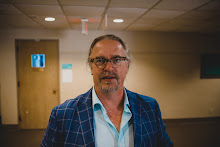
My photo
I am more and more convinced that most congregations die from a staggering lack of imagination. Let's change that. Let's imagine a creative future with God and each other together. Drop me a line on email or leave a comment if you have thoughts on God, Jesus, congregations, the church or whatever.... I look forward to our conversations.

Tuesday, September 22, 2015

A Papal Visit

The Pope of the Roman Catholic Church, Francis I, begins his visit to the United States today. This is big religious news. Many people wonder why it is news?

First, the Pope is, technically, a Head of State. Vatican City is its own political entity, even though it is nestled tightly in the middle of Rome, Italy's largest city. So in this case the Pope might not be more different than any Prime Minister or President of any other country. The Pope is charged with making political statements. (Many people in our country get confused about this issue, and think the Pope should stay out of politics. But really, how many heads of state do you know of that stay out of politics? The Pope is a politician.)

Secondly, the Pope represents about 120 million Americans, roughly a third of us, in some way as a spiritual guide. He is the head of the Roman Catholic Church, although, as with all leaders, his followers have varying levels of commitment. There are quite a few Roman Catholics who do not care, in fact, may not even know, that the Pope is making a visit here. On the other hand, there are quite a few Roman Catholics who are pumped up to have the leader of their faith visit here. The travails of leadership...Image result for pope francis

For me, the Pope will get me to read a few more articles on the web about his speeches and his ideas and proposals for his people. I have a lot to do while the Pope is here, and I don't think I'll have time to fit him into my schedule. (Unless one of the papal emissaries wishes to come to Blair and teach Confirmation for me so I could go hear the Pope.) I am glad he's here, to keep things honest so to speak, but his visit is not going to change my routine at all.

Since a Pope (Leo X) ex-communicated my hero Martin Luther, I'm not a huge supporter of the idea of "pope." I understand that every group can use a leader, but I'm not too big on the way power has coalesced into the papal office over the past centuries. The doctrine of papal infallibility ratified in 1870 at Vatican I is a complete mystery to me. Why would anyone want to be infallible at any level? What's the point? I find great consolation that the actual men elected Pope have never used the doctrine. I am sure the Popes, like most of us, find such a idea inconceivable in conjunction with a doctrine of free will.

This particular Pope seems a bit more in tune with our world. Although as a scientist, he drives all the people who do not believe in science nuts. (I don't really understand how people cannot "believe" in science. I understand you don't want all decisions made by science, but it's not like gravity or electro-magnetism is going to go away anytime soon. Deal with it.) This Pope seems to respect women a bit more than others; he really wants to see people act differently in respect to our climate; and he does not seem afraid to put forth bold proposals in order to make his points. He also seems very personable, and that goes a long way these days...just ask his predecessor, Benedict XVI who had the personality of Roquefort cheese.

No matter how good or bad this Pope this, he cannot live my life for me or for anyone else. My faith rests in the relationship God has established with me in the death and resurrection of Jesus Christ through the power of the Holy Spirit. No matter how life goes for me, that faith cannot be taken. It might be lost, misplaced, or forgotten, but it can't be taken because it is not mine. It's for me, but it's not by me. Faith is the regal relationship I have with God, and nobody, not even the Pope, can change that.

My your tables be full and your conversations be true.

Tuesday, September 15, 2015

Theology and Culture

I am a Lutheran Christian. To remind how us how English grammar works, in that sentence "Lutheran" (an adjective) modifies the word "Christian" (object). In other words, there are other kinds of Christians besides Lutheran ones. But I am not of those types.


I have lots of friends that are other types of Christians. Some have denominational labels, such as my Missouri Synod Lutheran friends, or even my Roman Catholic friends. Some of my Christian friends define themselves by political labels, such as Progressive Christians or Conservative Christians. Others use their self identity to understand their Christianity, such as my Gay Christian friends or my Social Justice Christian friends. And--of course, you can mix and match as many adjectives as you can find, such as my United Church of Christ, Gay, Low-Church, Social Activist Christian friend. But I am just a Lutheran, although to be fair I am mostly affiliated with the Evangelical Lutheran Church in America branch of Lutheran. The ELCA is a denomination of Christianity.   Image result for elca

And according to recent studies my denomination is the least diversified denomination in the United States. We are almost exclusively white, middle class, and well-educated. And many people in my denomination are worried about this. They seeks ways to integrate other people of color into our whiteness. They seek ways to incorporate people of poverty into our middle class-ness. But what we don't seek, and what I think makes a huge difference in why are are so white and middle class, is ways to be un-educated. Our focus on education naturally leads to places of power, wealth, and exclusivity. In other words, as long as we remain committed to education we will probably remain middle class, and mostly white.

But here's the thing: to be a "Lutheran" Christian is to be committed to education, especially academic education. Martin Luther was a college professor. He held a doctorate in Philosophy and Theology. His writing on Christianity is some the densest theological work in the history of Christianity. And to grasp his understanding of Christianity, and how to best live in the love of God in Christ Jesus through the power of the Holy Spirit, often requires some serious thought. Just going out and helping your neighbor by serving in a soup kitchen will not help you understand Martin Luther, but it will help you work on your Christian love.

The theology of Lutheran Christians takes a while to "get." One of my professors of Luther used to say, "You can't be Lutheran usually until you're 30. You haven't suffered enough." And he wasn't talking about suffering the pain of discrimination, or racism or sexism. He was talking the suffering that comes from trusting all that you are to a God who dies. And although there is a promised future after death, for Lutheran Christians that doesn't mean you get it automatically.

That doesn't always work for people who are starving. Or people who are subjected to harassment. Or people who are killed for being a darker skin. To say that "God is probably going to help you, at least, that's what God promised" is not always the most comforting or motivating of words.

So, to my bothers and sisters in Lutheranism, keep the faith (and as Lutheran, of course, by that we mean the "regal relationship" (Joseph Sittler) granted us by God in Jesus Christ through the power of the Holy Spirit. Nothing is simple in our tradition.). We might not ever be the most diverse group of Christians, but that doesn't mean we can't try and help other Christians out in their struggles. Sola gratia.

May your tables be full and your conversations be true.

PS: Here's a sermon for you in a Lutheran Christian style. 


Tuesday, August 25, 2015

Starting Over

The people left Jesus. Literally walked away from, John says in his gospel. Your teaching is too hard they complained. So they left him.

And it's here where Jesus, wondering if anybody was going to stay with him at all, asked his most loyal disciples if they too wanted to bail? Peter says, "Lord, where could go? You have the words of eternal life?" And from that moment on we have Christianity...

Believing about Jesus is not the same as believing in the God whom Jesus worshiped, indeed, the God whom Jesus is. It has to do with commitment, with passion, with desire. To believe Jesus is God is to accept some pretty difficult things to accept, to trust in God's undying love in spite of the available evidence or lack thereof. To live with Jesus to to live in a mystery, within an opaque shadow of hope and dreams, filled with suffering, and oftentimes despair. Living with Jesus, the Christ of God, is not for the faint of heart. There is sometimes too much failure to comprehend, and yet we strike another match and move on...

So we have this song 


And if you want, you can also listen to a sermon I gave on this topic recently.


May your tables be full and your conversations be true.

Monday, August 17, 2015

Learning to Share

It takes awhile for us to learn to share. We usually need some catalyst, some person, some motivation to move us out of our greedy prisons of self-hood to share gifts we have been given. Most of the problems I see in our world come from people not wanting to share anymore. (If they ever did?) White people don't want to share privilege with black people or any people of color. Rich people don't want to share with poor people. Men don't want to share with woman. Straights don't want to share with gays.

Yes, people donate goods, services, and money. Yes, there are many people who have learned to share. But there are many who have not learned this yet...and they all seem to be running for political office. Sharing makes the world go around.

Over the years it has been my pleasure to meet a lot of people who work as bartenders and servers in the food industry. They make $2.14/hour. That's all their wealthy owners are required to pay, so they pay that, and sometimes complain about that too. Needless to say, unless somebody shares with my friends, they aren't going to last long on $15 a day. So we share with them. Unfortunately, we call it "tipping," but it is really sharing. Sometimes people don't share at all with them. Sometimes people try to share the least they can with them. That is sad. Share to make their life better, not so you can eat more or drink another beer.

The Christian Church has always put sharing as the top priority of spiritual maturity. We get it from Jesus, who begotten from God, shares the Spirit's energy and life eternal with us. So we share. Not because we want to, not even because we like to share, we share because that's how we got we have, and to not share those gifts, would be the most greedy, selfish act of all. Happy sharing!

May your tables be full and your conversations be true.

Thursday, August 13, 2015

They Call it a Lectionary: In Support of Boring

Lectionary: lectionary is a book or listing that contains a collection of scripture readings appointed for Christian or Judaic worship on a given day or occasion. There are sub-types such as a "gospel lectionary" or evangeliary, and an epistolary with the readings from the New Testament Epistles. (from Wikipedia, August 13, 2015)

Image result for lectionary My congregation organizes its worship life around the readings found here. Other congregations use a "Narrative Lectionary," and still others do not use any lectionary at all in organizing its worship. Notice though: everyone organizes around the scripture, it's just a question of which scripture?

But something problematic is happening in congregations that use lectionaries. (I have limited experience with congregations that do not use lectionaries, but those I know of do not have this problem.) The problem is that somehow preachers have the idea that the lectionary readings for the week can speak to whatever problem arises in our world today. This is not so. (Unless you are a theologian who argues that all problems arise from the same source, like lack of trust, or blasphemy, or idolatry. Then, of course, every text does apply because the problem the text deals with are the same problem we're dealing with today.) But if the problems of the world have multiple sources (and I am not advocating there are multiple sources), then clearly, assuming the lectionary readings correspond to the issues of today is problematic.

Here's the thing: if you're going to be a lectionary preacher all your sermons will be the same. The examples and stories will differ, but every sermon will root out the same source, till the same problem, and harvest the same fruit. Although the Bible has a lot of variety, to distill it to one message week in-and-week out for forty years of preaching could get a bit boring.

Many preachers opt for other things; some unfortunately, abuse the Bible to fit their version of the problems and issues of the day (for example, Paul may really have been afraid of sex.) It
is tricky to preach on the lectionary because it forces us to distill every text, every story, every poem in the Bible through the lens of Jesus Christ and his forgiveness in the power of the Holy Spirit. Your sermons will sound boring, repetitive, and recycled because every week you are going back to the same starting point to end at the same destination.

That's why my sermons are boring. They all start with the human inability to trust God, the inability to trust our God-given humanity, and the inability to trust our neighbor. Every sermon I've ever delivered starts there. I don't care what the lectionary text is, because for me that's where every verse in the entire Bible starts, so it doesn't matter what the text is, it will start there. And every sermon ends at the cross and resurrection, and the power of God in Jesus Christ through the Holy Spirit to free us for forgiveness. That's as far as Christians can go; the rest is just day by day, walking paths un-walked, crossing streams never forded, and climbing mountains of corporate and individual struggles as yet un-crested. Starting the same place, ending the same place...yes, my sermons are predictable and boring.

But there are many stories to tell about that beginning and ending. There is great variety on how God's love gets shared through our inability to trust. There are many ways in the Bible that get at that issue, and many ways in our lives that show us how God responds. God's love constantly battles against our lack of trust, and preaching, whether from a lectionary or through a dart at the table of contents of the Bible, shows that love in action. Granted, after a while, the same thing week after week can get a bit dull.

But sometimes God's love can feel that way too...even in the lectionary.

May your tables be full and your conversations be true.

Here's a sample sermon of what I'm talking about.