Your Blog Steward

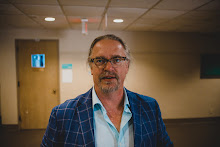
My photo
I am more and more convinced that most congregations die from a staggering lack of imagination. Let's change that. Let's imagine a creative future with God and each other together. Drop me a line on email or leave a comment if you have thoughts on God, Jesus, congregations, the church or whatever.... I look forward to our conversations.

Saturday, November 19, 2016

A Post-Election Requiem

If you didn't realize it before the election, I hope you realize it now: the United States is a racist, homophobic, misogynistic country, and there's no use pretending anymore that it is not. We're still a great country, but the veil has been lifted. I've known this for a long time, and I always appreciated the veneer of civility that we would use to try and make our virulent hatreds a little less controlling. But the law cannot change the hearts of people. The Apostle Paul knew it, Martin Luther knew it, and now we know it. Law can keep us civil, but it cannot erase sin.

There are a lot of people, of course, that want law to erase sin. Their cause is admirable, as law has been about the only thing in the last 4000 years that has kept us civil. And the more civil we got, the more we stretched the law and its limits in hopes of erasing sin. But the law cannot do that, and sin always wins against the law. Even if it takes a long time...sin wins that battle eventually.

And if you've tried to make sense how the fraud Trump became President-Elect, you realize it's a lot like trying to put a square peg in a round hole--it just doesn't fit know matter what angle you try. That's how sin works. It ignores the rule of law, so that law is powerless to defend ITSELF against sin. What sin attacks is law, and sin always finds a way to work that law cannot go. And sin wins.

Image result for pantocrator  In the Christian tradition we hold that only one thing defeats sin, death, and the devil, and that is the love of God in Christ Jesus our Lord. Or, in a catchier, post-election slogan, what we call the Word of God. The love of God, unlike the law, does not play by regular rules. The love of God is based on God's love for every single person, Christian, Jew, Muslim, Hindu, Buddhist, and all the rest; the love of God is for every man, woman, trans, no matter how young or old; the love of God is for every person, regardless of the color of your skin. The love of God is for all people, no exceptions. Only that love has the power to defeat sin.

I want to live in that love, don't you? Don't you want to live with people you can trust? Don't you want to work with people who care? Don't you want to be celebrating with people who know joy? Wouldn't you want to grieve with people who know despair?

To live in that love, it seems to me, means we have to start loving those everyone tells us not to love. Otherwise, how will you be able to trust them? We might start celebrating with those whom we don't know, or else how will you know their joy? We need to grieve with those who weep, or we fail to know their despair. And, here's the funny thing about that love, it will allow people to trust, celebrate, and despair with you  as well.
Image result for rublev icon

The fraud Trump cannot take away that love from you. He can kill you for it, but a lot of people have died for that love. But know this, because God's love cannot be defeated by sin, death, or the devil, every time we die for it, love wins. I am sad that people will have to die for God's love to win, and I have arrived at the conclusion that I may very well be one of them. So be it. If God's love is good enough for me in this world, God's love will be good enough for me in the next.

May your tables be full, and your conversations be true.


Here for the Oppressed

This year marks the 25th anniversary of my ordination to the office of Pastor. It seems rather strange to think it’s been that long, and recently the time has seemed to go by even faster. I suppose, as my daughter once noted, “we’ll just move to Florida and die.” Anything’s possible.

Here’s what I’ve seen change in the 25 years since I’ve been ordained, in no particular order of importance; nor, really, without judgement or critique. I am part of all these changes obviously (no matter how slight the impact upon me personally), and some fit me better than others…

…worship has really changed. I started one of the first alternative church bands of the ELCA back in 1990, and every week we got visitors saying they wanted to go back to their congregations and try it. When I started I never saw a drum set in a church, now I can’t find a church without one. Worship has a wide variety of music, prayers, spiritual practices, and venues and times and we’re all over the place. If you’re in an area with a lot of ELCA congregations, you could probably go to worship seven days a week. (I mean, 10 years ago I started a congregation where worship was on Thursday night, and we didn’t have any music at all! The drums stayed silent.)Image result for drum kit

…leadership has changed. My colleagues, for one thing, are a lot younger than me, but as the Call Committee can attest, there aren’t as many of them. The ELCA currently has only 6 pastors for every 10 calls, and many congregations go years waiting for one. This has asked many people to take on the role of leadership, of learning and training to pastor people, and I for one, think this makes us a stronger church. I used to say at one congregation I served that I wanted to be known as they “guy they let preach once in a while,” when asked what I did there.

…competition has increased. What I mean by this is that when I first got ordained there wasn’t a lot you could do on Sundays besides church. Texas still had “Blue laws” when I was in graduate school (1986), and you either went to church or had your neighbors asking why didn’t you? Now, there is a lot to do besides church, and many of the benefits of church are now offered by others. When I was starting out, the only way to help out Haiti in a hurricane was through a religious charity. Now there are non-profits dedicated ONLY to that work. Habitat for Humanity used to be about building homes, not about donating lumber or money for supplies. Everywhere the church once was the “only game in town,” is now an metropolis filled with people who want to help. Image result for elca world hunger


This year has tried the souls of many. Many are still in fear that who they are is a crime. Women, people of color, sexual minorities, workers without a safety net all have reason to fear based on the rhetoric that echoed throughout our land. But we are here for the oppressed. God loves those the world loves the least. As Jesus Christ said, “Blessed are the poor in spirit, for theirs is the kingdom of heaven.” (Matthew 5.3) That hasn’t changed.


May your tables be full and your conversations be true.

Thursday, October 13, 2016

A Reformation reminder

“A Living church of the dead, not a dead church of the living”
                                                                           Jaroslav Pelikan

I remember when my teacher first shared this idea with me from his teacher. It’s not only catchy, but it reveals a deeply hidden truth that often can get forgotten in congregations: we are here now. A congregation can get so caught up with its past that it is dead to today. What happened in the past becomes more important than living today. The other side of the coin, naturally, is that the past is completely forgotten, and with unstable foundations and dreams of opaque shade, the living today becomes fraught with nervousness and tension. No one knows where we are from or where we are headed to, and things get tense.

Congregations become dead, or seem dead to others, when they are not living in the “now.” Living today. Informed by a past, and guided by a future, congregations live best when they take seriously the realities of today. 500 years ago, when Martin Luther offered this advice, the congregations that began living in “today” became what you and I know as the Reformation. Celebration of the 500th Anniversary of the Reformation is not a remembrance of days past, but rather guidance for the present day.


Luther is dead, but many of his ideas might bear great fruit in 2017 and beyond. For example, Luther believed that God’s grace was stronger than all that “sin, death, and the devil” could muster to the battle. Therefore, he didn’t care about the devil. He assumed the devil would always try to sway him away from Jesus, and after a while he just got bored and tired of the devil. What if we treated all the negativity heaped upon us, not as something we must overcome, but rather as stuff that is finally only in the hands of Jesus, and pretty boring to us? What if, instead of worrying about something, we turn it over to Jesus, ignore the devil’s prodding us to worry, and get on with helping our neighbors, friends, and enemies?


Such an idea was fairly radical in Luther’s time, and maybe even more so today? Can the church of “now and today” even imagine Jesus Christ might save a situation? Would we be willing to lose, to go bankrupt, and to suffer loss of privilege, if that is what it takes to be a “living church?” Remember this little nugget about the Reformation as we celebrate its heritage and importance in the next year: we remember Luther not because he won, but because he lost. And God turned that loss into 500 years of witness to the gospel.

May your tables be full and your conversations be true.

Wednesday, March 30, 2016

I wonder...

There is this guy running for President who says the craziest things. I wonder what would happen if nobody heard him anymore? I mean, what would happen? Let's say a major TV network like ABC said "We're not going to have anymore stories about him." What would happen?

A couple things would happen for sure. Advertisers that want to sell things to people who  "like" this guy, would not advertise on ABC anymore. But most products that people buy are bought by all kinds of people, and so you'd miss out on selling to those who "don't like" guy and are still (or even now, as it would be in my case as I have watched nothing on ABC for 20 years other than ESPN related things) watching. Some would opt out, but not all I am sure. So advertising revenue for ABC would be down. How much? That's an open question...

Secondly, this guy would start railing against ABC for being "unfair." Note: he can be unfair, but no one else can. Unless he owns part of ABC (a distinct possibility, but then it might be some other network or news source that would have to boycott him anyway), ABC could tell him to suck it up, and start saying things less stupid if he wants them to pay attention. But he would be mad, and he seems to carry grudges...oh well, these are the choices our hypothetical ABC executives would have made.

Because the danger of this guy is not what he says, but what others don't tell us about our reality or our world because they are too busy telling us about him. In other words, what are we missing because we're spending so much time on this "American Idiot?" (apologies to Billie Joe Armstrong) I wonder what kind of world we would have if we just didn't listen to such people as this candidate? I wonder if the world would be safer? It would certainly be cleaner...

There is a lot of hopelessness out in my neighborhood, and it is brought about by an almost pathological focus on issues far outside of one person's control. We can't "control" terrorism, misogyny, racism, poverty, or wealth inequality, but that's what we hear about so the world seems so bleak...so hopeless.

I wonder if we thought about the stuff we could control, would a sense of hope be possible? An alcoholic can't stop drinking, but they can not have the next drink. A white person can't stop racism, but they can turn down the next offer they receive because they are white. In other neighborhoods, not mine maybe, there is some real hopelessness. I mean, if you're being shot at just because you are black, there' not a lot of hope for change...unless the people doing the shooting stop shooting. I wonder what that world would be like?

I wonder about a lot as I live into another season of Easter here in the Church triumphant. Another season of love and hope, and being able to take risks because from death I've been set free! He is risen! Alleluia! (He is risen indeed!) The Christian faith puts all its hope-eggs into just one Easter basket, and so far that's been enough. And it probably will be enough forever...but I wonder, if the Son of Humanity were to return  would he find faith?

He probably would. But not in the media-saturated markets and minds of so many, but rather in the humble, simple folks who understand that there are many worse things than death, and everybody's dying. I wonder how that would go?

May your tables be full and your conversations be true.