The other night I was asking a group of artists where they got their theological training...they all laughed. One has once had a class in "World Religions" in college, but the other three confessed they only knew what they had read on the internet in preparation for this work (they had all prepared an artistic piece for the anointing of Jesus at Simon the Leper's house). "I just googled it," said Kris, our poet for the evening.
I was floored. I had spent 25 years of my professional life trying to draw the same conclusions they had read on the internet for a couple of hours. (To be fair, one said, she used my blog as a resource. Nice!)Basically what I dropped $60,000 on for fees, books, and tuitions, these people got for free. Ideas, thoughts, relationships, doctrines, all of it could be had with a quick tour through Wikipedia. Well, talk about humility...
But it got me thinking about something one of my interns said to me. "I don't like to read books." (Paradoxically, her major work for me was collating my library, and organizing my office--which is really just piles of papers and books.) And why should she? If she can get the gist of anything with a quick search on google or whatever, why read a book? She is smart enough to know how to draw conclusions based on rational or relational principles. (As the joke goes: There are two kinds of people in the world; those who can draw rational conclusions from partial evidence, and those.) She was one who could draw such conclusions, and I am not wondering if there are a lot of folks like her, who because of the plethora of information and lack of time to process it, have developed the same skill as well? Could it be that soon we will need only a notation for people to draw conclusions?
My philosophically inclined friends will tell me that the underlying interpretative grid makes for analysis and conclusions, and Google might be hard pressed to develop those. I agree. The underlying interpretative grid is probably going to come from those old, traditional, established places like families, congregations, politics, and economies. So, my doctorate does have some value, but it is not in providing information to the world--rather, it is providing a way for the information to be interpreted. Now, I have to go edit a wiki page on hermeneutics. I'll leave the rest to God.
May your table be full, and your conversations be true.
Your Blog Steward
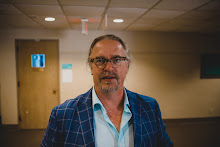
- Scott Frederickson
- I am more and more convinced that most congregations die from a staggering lack of imagination. Let's change that. Let's imagine a creative future with God and each other together. Drop me a line on email or leave a comment if you have thoughts on God, Jesus, congregations, the church or whatever.... I look forward to our conversations.
Sunday, March 25, 2012


Thursday, March 22, 2012
Reading "Slant"
Last night I got a chance to be some some artists (a painter, a poet, a musician, and an actor) who helped me discern a bit more of the story about Jesus' anointing at Simon the Leper's house. (Mark 14.3-9) What I learned was great. Here's some stuff in no particular order:
1) It never hurts to have people who see the world "slant" (in another perspective) read with you. The actor, for example, brought forth the frustration it must have been to be a friend of Jesus'. The guy never talked straight (especially in the Gospel of Mark where we were reading), and this story of "the poor will always be with you" is just a buzz-killer of the highest degree!
2) The Internet has bought into contemporary biblical criticism; or, at least made it easy for artists to find it. Sometimes I despair when I run into the plethora of literal biblical readers who come into my classes, and wonder how will it ever change? It already has changed! Within 10 years (I'm guessing) it will be impossible to find a biblical literalist that any 5 point Fundementalist would call "literal." Mainline Protestantism no longer supplies "Bible churches" with the de-facto literalists who made up their growth over the past 40 years. (Look up the statistics, most of the people who "grew" Bible churches over the past 40 years grew up in mainline Protestant congregations. Where are the Bible churches going to get their new converts if mainline Protestantism doesn't provide them?) People don't read anymore, much less literally. How does this trend (biblical literalism)survive the internet? (Look for another post soon on this topic.)
3) Never underestimate the power of good leadership. I am not sure how my friend Josh Sawyer pulled this off over the last few weeks, but he is good at gathering this type of celebration together. He's also 20 years younger than me...which means my children may actually have a chance to go to church when I am gone.
4) Lastly, I don't miss preaching...but I would like to have a Bible study class again...but this time with lots of different kinds of folks. Most of my Bible studies have been with the same type of people, and I'd like to have one with artists, literalists, gays, straight, married, single, Black, Caucsian, Asian, Latino--whatever...just people who want to see what God is up to in the world, and how they might--in even just a simple act--help out, and read it "slant."
May your table be full, and your conversations be true.
1) It never hurts to have people who see the world "slant" (in another perspective) read with you. The actor, for example, brought forth the frustration it must have been to be a friend of Jesus'. The guy never talked straight (especially in the Gospel of Mark where we were reading), and this story of "the poor will always be with you" is just a buzz-killer of the highest degree!
2) The Internet has bought into contemporary biblical criticism; or, at least made it easy for artists to find it. Sometimes I despair when I run into the plethora of literal biblical readers who come into my classes, and wonder how will it ever change? It already has changed! Within 10 years (I'm guessing) it will be impossible to find a biblical literalist that any 5 point Fundementalist would call "literal." Mainline Protestantism no longer supplies "Bible churches" with the de-facto literalists who made up their growth over the past 40 years. (Look up the statistics, most of the people who "grew" Bible churches over the past 40 years grew up in mainline Protestant congregations. Where are the Bible churches going to get their new converts if mainline Protestantism doesn't provide them?) People don't read anymore, much less literally. How does this trend (biblical literalism)survive the internet? (Look for another post soon on this topic.)
3) Never underestimate the power of good leadership. I am not sure how my friend Josh Sawyer pulled this off over the last few weeks, but he is good at gathering this type of celebration together. He's also 20 years younger than me...which means my children may actually have a chance to go to church when I am gone.
4) Lastly, I don't miss preaching...but I would like to have a Bible study class again...but this time with lots of different kinds of folks. Most of my Bible studies have been with the same type of people, and I'd like to have one with artists, literalists, gays, straight, married, single, Black, Caucsian, Asian, Latino--whatever...just people who want to see what God is up to in the world, and how they might--in even just a simple act--help out, and read it "slant."
May your table be full, and your conversations be true.
Tuesday, February 28, 2012
Drinking--the piano, not me...
Read a fun blog the other day about a mother of young children who was giving up her daily 5:00 pm glass of wine during this season of Lent. Apparently, she regularly has this glass of vino during the day to give her something to do "for herself,"or to "make her feel like an adult." She wonders as her children get older if she will cease to have this need to "take a break" from her daily routine?
Aside from the obvious alcoholic issues (more about that in a bit), I wanted to comment to her something like: As your children grow older you do not want to drink wine any more...you don't want to drink it any less either!
I do remember when the kids were young, and I stayed at home with them a few days a week. (My wife and I did tag-team parenting.) When she would come home on the days I was with the kids I would practically run out into the driveway to meet her--often with a beer or some Jack Daniels for both of us (as you know, working is no picnic either.) Time passed, and my children grew older, and my liver survived.
But alcoholism as a disease is a huge issue, and especially for young adults in that 17-21 year old time frame which is extemely difficult to manage without alcohol. I believe it should be legal for people to drink at age 12, and I see so many benefits to that it would take 100 blogs to list them all. Wine is never the problem...the problems are always covered up by wine. Even a person who gets drunk on one glass of wine or beer or whatever, should take that seriously, and drink only when the community can provide support to keep you healthy and whole. (in other words, don't drink alone, and never drive!) Our society has lost all sense of reality on this question. Kids don't drink because they like the taste of beer, they drink because adults haven't given them anything else to do! Kids don't drink because they want to die and get into car accidents, they drink because we refuse to let them grow up and be adults! And don't get me started on the drugs, which as my daughter once told me, if you're going to break the law, why not smoke it?
Lower the drinking age, show children how to drink responsibly, and we would probably have safer roads. And healthier children.
But back to the young mother...she was giving up wine, not because of her alcoholic tendencies, but rather, to use that "adult time" in her day to focus on God. Now that, is a good idea. The challenge will be if she can use her 5 pm wine to focus on God. And, since the Christian God is not opposed to wine, she has a shot...but she got the point. It's never the relationship with wine that is the problem, it's the other relationships of our lives that wine can make problematic. Just as God isn't only for adults, neither should wine, from the making and cultivating of one of God's greatest treasures to the drinking, be only for adults. If not drinking wine can bring us closer to God, imagine how much closer we could get if we did something God actually likes us to do?
May your table be full, and your conversations be true.
Aside from the obvious alcoholic issues (more about that in a bit), I wanted to comment to her something like: As your children grow older you do not want to drink wine any more...you don't want to drink it any less either!
I do remember when the kids were young, and I stayed at home with them a few days a week. (My wife and I did tag-team parenting.) When she would come home on the days I was with the kids I would practically run out into the driveway to meet her--often with a beer or some Jack Daniels for both of us (as you know, working is no picnic either.) Time passed, and my children grew older, and my liver survived.
But alcoholism as a disease is a huge issue, and especially for young adults in that 17-21 year old time frame which is extemely difficult to manage without alcohol. I believe it should be legal for people to drink at age 12, and I see so many benefits to that it would take 100 blogs to list them all. Wine is never the problem...the problems are always covered up by wine. Even a person who gets drunk on one glass of wine or beer or whatever, should take that seriously, and drink only when the community can provide support to keep you healthy and whole. (in other words, don't drink alone, and never drive!) Our society has lost all sense of reality on this question. Kids don't drink because they like the taste of beer, they drink because adults haven't given them anything else to do! Kids don't drink because they want to die and get into car accidents, they drink because we refuse to let them grow up and be adults! And don't get me started on the drugs, which as my daughter once told me, if you're going to break the law, why not smoke it?
Lower the drinking age, show children how to drink responsibly, and we would probably have safer roads. And healthier children.
But back to the young mother...she was giving up wine, not because of her alcoholic tendencies, but rather, to use that "adult time" in her day to focus on God. Now that, is a good idea. The challenge will be if she can use her 5 pm wine to focus on God. And, since the Christian God is not opposed to wine, she has a shot...but she got the point. It's never the relationship with wine that is the problem, it's the other relationships of our lives that wine can make problematic. Just as God isn't only for adults, neither should wine, from the making and cultivating of one of God's greatest treasures to the drinking, be only for adults. If not drinking wine can bring us closer to God, imagine how much closer we could get if we did something God actually likes us to do?
May your table be full, and your conversations be true.
Friday, February 24, 2012
Staying focused
At some point I came to realize that all of us have ADD (attention deficit disorder), and there are a few people who learn to overcome it. Those people who can singularly put their mind and efforts onto one issue or into one train of thought and follow it to the end are the ones who are special...the rest of us probably need the drugs!
What makes this interesting for me is that religious leaders often have this singular focus. In my conversations with religious leaders, those with the most creative, energetic, and Spiritual ministries often have that single focus. And, since I don't meet many of these types of leaders, I'm going to guess that the rest of us lack that focus at some level...
Maybe we are in positions that do no let us focus on one thing, or calls to ministry that are about spreading ourselves into many areas a little bit, rather than one area a lot. Other pastors, for example, often say they wish they could have my job, writing and thinking and talking about Christianity, Jesus, the mission of God, congregations, and how to discern the Holy Spirit in community...they think it sounds fun compared to their jobs of meetings, and visits, and the regular parish schedule that does not allow time for the stuff I do. Of course, I tell them I envy them--they are not under pressure to stay focused on one thing and one thing only--and I am not sure God made me to have such focus. (I will leave out the obvious fact that it is true one is never happy with one's lot in life no matter how much focus you have or not.)
I guess I am in search of a Christianity that does not require you to stay focused on God all the time, or even a majority of the time. I am looking for a Christianity that allows me to be in relationship with God that can accept my focus when I get it my life in focus...which, of course, is never. So I wouldn't have much of a relationship with God if I got what I wanted. So I got something else instead...
Because I can't focus on God, God has focused on me. Jesus, as the Son of God, is the laser of God that drills into and illumines me so I can see--every now and then when I can focus--on the love God surrounds me with every day. A love from friends who send a text or Facebook message--one even called me on the phone (old school) the other day! A love from a great wife, children who tolerate me, and strangers who give the long-haired, sandal-wearing hippie a wry smile in line at the grocery store. The more I try to focus on God the fuzzier my relationship with God gets, but the more I let God focus on me? Well, that's when I see best. Strange.
May your table be full, and your conversations be blessed.
What makes this interesting for me is that religious leaders often have this singular focus. In my conversations with religious leaders, those with the most creative, energetic, and Spiritual ministries often have that single focus. And, since I don't meet many of these types of leaders, I'm going to guess that the rest of us lack that focus at some level...
Maybe we are in positions that do no let us focus on one thing, or calls to ministry that are about spreading ourselves into many areas a little bit, rather than one area a lot. Other pastors, for example, often say they wish they could have my job, writing and thinking and talking about Christianity, Jesus, the mission of God, congregations, and how to discern the Holy Spirit in community...they think it sounds fun compared to their jobs of meetings, and visits, and the regular parish schedule that does not allow time for the stuff I do. Of course, I tell them I envy them--they are not under pressure to stay focused on one thing and one thing only--and I am not sure God made me to have such focus. (I will leave out the obvious fact that it is true one is never happy with one's lot in life no matter how much focus you have or not.)
I guess I am in search of a Christianity that does not require you to stay focused on God all the time, or even a majority of the time. I am looking for a Christianity that allows me to be in relationship with God that can accept my focus when I get it my life in focus...which, of course, is never. So I wouldn't have much of a relationship with God if I got what I wanted. So I got something else instead...
Because I can't focus on God, God has focused on me. Jesus, as the Son of God, is the laser of God that drills into and illumines me so I can see--every now and then when I can focus--on the love God surrounds me with every day. A love from friends who send a text or Facebook message--one even called me on the phone (old school) the other day! A love from a great wife, children who tolerate me, and strangers who give the long-haired, sandal-wearing hippie a wry smile in line at the grocery store. The more I try to focus on God the fuzzier my relationship with God gets, but the more I let God focus on me? Well, that's when I see best. Strange.
May your table be full, and your conversations be blessed.
Thursday, February 23, 2012
I am not a Christian, I guess...
I was told the other day by a friend that-according to some politician-I had a "phony theology" in all probability. And for the first time in a long time, I actually generated interest in politics for more than jokes. Then, as I was about to research such a thing, I saw the red cardinal that has taken up residence in our backyard, and the moment passed...I am back to no longer caring about politics and/or politicians...it was close!
But I probably do have a "phony theology" at some level. I call myself a Christian, but the one who defines that religion for me (Jesus of Nazareth) died before he could become one...so that is a little phony. I mean, to claim to follow a guy who died before he had a chance to do the stuff you claim he did is a bit phony for my conscience.
What interested me about the slur, however, was the use of the word "theology." I didn't know politicians knew that word, especially politically conservative ones. Theology, as the word has come to be used, means some kind of systematic, organized understanding of religious symbols. And the reason why I ignore politicians is that they seem to have no grasp of that. Politicians use religious symbols to access power (in a democracy that's usually votes), but they never actually try to organize them. So to discover one politician gave a shout out to theology is rather notable. But theology is how you organize the religious symbols and values of your life...phoniness just isn't an option.
To be "phony" something has to be a sham or counterfeit or even fraudulent. What would be "phony" would be using theology to try to make yourself into something you are not, such as using religious symbols to garner votes. What would be phony is how your hypocrisy puts a religious sheen over the way your organize your world. In this quest to combat phoniness I strive to make my theology intelligible and understandable to people. But I make no apologies for my system and organization.
So I will continue to think it's not acceptable to be rich when so many are poor; I will continue to believe that all people are equal, even if they do not think so or understand how they are equal; I will continue to believe that life is always about freedom, expanding choices, and letting people explore the caverns of the universe; I will continue to believe that life is about suffering and surrendering before it is about anything else...and this has nothing to do with being born in the USA. (apologies to Springsteen) It has everything to do with being a child of God in Christ Jesus in the power of the Holy Spirit. It has everything to do with, as my pastors are found of saying, being loved beyond your wildest imagination.
That's theology. You can call me a Christian if you want...but it won't change the theology no matter what you call me.
May your table be full and your conversations be blessed.
But I probably do have a "phony theology" at some level. I call myself a Christian, but the one who defines that religion for me (Jesus of Nazareth) died before he could become one...so that is a little phony. I mean, to claim to follow a guy who died before he had a chance to do the stuff you claim he did is a bit phony for my conscience.
What interested me about the slur, however, was the use of the word "theology." I didn't know politicians knew that word, especially politically conservative ones. Theology, as the word has come to be used, means some kind of systematic, organized understanding of religious symbols. And the reason why I ignore politicians is that they seem to have no grasp of that. Politicians use religious symbols to access power (in a democracy that's usually votes), but they never actually try to organize them. So to discover one politician gave a shout out to theology is rather notable. But theology is how you organize the religious symbols and values of your life...phoniness just isn't an option.
To be "phony" something has to be a sham or counterfeit or even fraudulent. What would be "phony" would be using theology to try to make yourself into something you are not, such as using religious symbols to garner votes. What would be phony is how your hypocrisy puts a religious sheen over the way your organize your world. In this quest to combat phoniness I strive to make my theology intelligible and understandable to people. But I make no apologies for my system and organization.
So I will continue to think it's not acceptable to be rich when so many are poor; I will continue to believe that all people are equal, even if they do not think so or understand how they are equal; I will continue to believe that life is always about freedom, expanding choices, and letting people explore the caverns of the universe; I will continue to believe that life is about suffering and surrendering before it is about anything else...and this has nothing to do with being born in the USA. (apologies to Springsteen) It has everything to do with being a child of God in Christ Jesus in the power of the Holy Spirit. It has everything to do with, as my pastors are found of saying, being loved beyond your wildest imagination.
That's theology. You can call me a Christian if you want...but it won't change the theology no matter what you call me.
May your table be full and your conversations be blessed.
Subscribe to:
Posts (Atom)